Leading and Lagging Indicators: Both are Crucial for Comprehensive Safety Study
Read the original article as published in Construction News and Review
By Kerry Smith Buck
In construction safety, leading indicators are proactive, predictive metrics that measure prevention efforts.
They provide foresight into potential problems and allow for intervention before a safety incident occurs.
Examples of leading indicators are safety training completion rates; the number of workplace inspections and audits performed; completion rates of preventative maintenance; employee participation in safety observations or surveys; and the number of near-miss reports.
Lagging indicators are reactive metrics that track past events like injuries or accidents. These indicators show the results of past performance and identify trends after they occur. They’re helpful in identifying patterns and measuring the effectiveness of safety programs by analyzing what has already happened.
Examples of lagging indicators include the total recordable incident rate (TRIR); days away, restricted or transferred (DART) rate; the number of injuries, illnesses or fatalities; lost time incident rates (LTIR); and workers’ compensation claims.
Both leading and lagging indicators are valuable. Construction safety directors say these indicators complement each other and work together to construct an organization’s entire safety program. Using both types allows a company to proactively implement preventative actions (leading) and then measure their success and identify any lingering problems (lagging). For example, high leading indicator numbers in safety training could lead to a decrease in lagging indicator metrics like injury rates over time.
“Here at Contegra Construction, we try to focus mostly on leading indicators…any preventative measures that we put into place based on what we see in the industry that could be a problem,” says John Flynn, safety director, whose degree in safety management comes from the University of Central Missouri. Proactively approaching near misses, Flynn adds, is a big part of the company’s strategy. Pre-job meetings with subcontractors give Contega an opportunity to obtain site-specific safety plans from subs that include a fall protection plan, steel protection plan, electrical safety plan and more. Sub-submitted job hazard analyses inform the contractor as to specific tasks for the day – such as installing a staircase – that may expose workers to a unique hazard.
“We also ask each subcontractor for a record of training,” Flynn adds. “For example, how was he or she trained in the specific task(s) he or she is being asked to perform on our jobsite? We’re not going to ask workers to do something for us that they’ve never done before. Training is a big one for us as an indicator of performance.”
Near-miss reports are a given for the large owners that Contega works for. “Daily safety inspections are also a must on these large projects,” Flynn says.
STCKY (which stands for Stuff That Can Kill You) walks are another routine observable on Contegra jobsites, under the category of a leading indicator. The contractor creates its own form as a proactive approach in identifying high-risk activities. “One example is a rotating part on a piece of equipment or tool, say a grinder,” he says. “Does it have a guard on it to prevent cutting? It’s well worth the 30 minutes it takes to do the STCKY walk. It’s a worthwhile investment in jobsite safety.” Contegra also hosts a hazard hunt that asks workers to examine their own areas and identify any potentially hazardous situations.
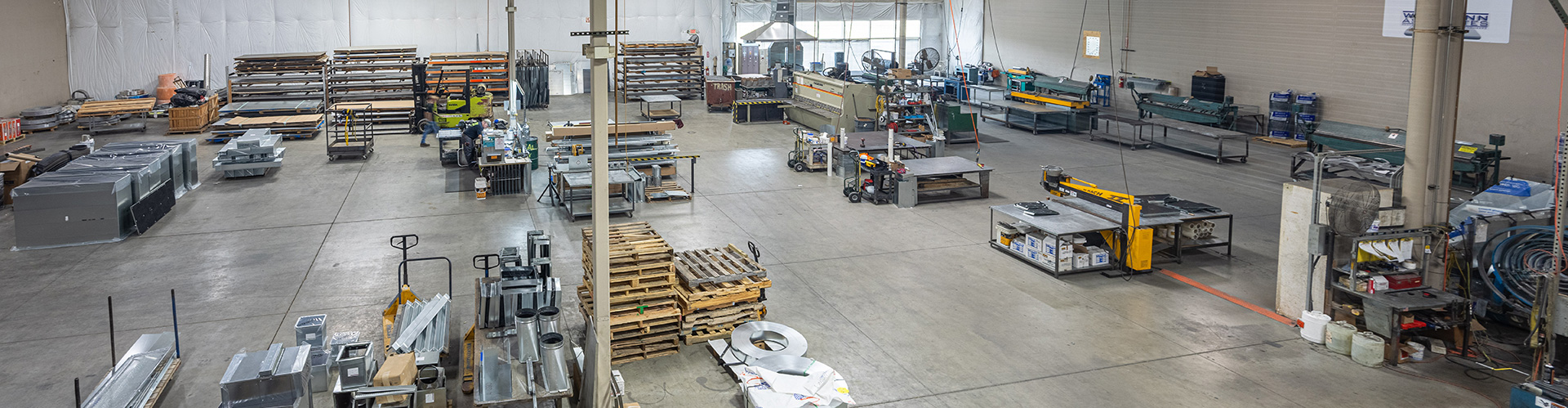
Being proactive in tracking leading indicators can pay off in a big way. One example is mechanical contractor Wiegmann Associates’ 24-year-long record of no lost-time incidents in its sheet metal shop. Safety director Dawn Bridges says that’s something to be proud of.
“It’s a huge thing for us whenever we catch things before they happen,” Bridges says. We value employee observations and perceptions immensely, and our workers know it. My guys don’t feel threatened in any way in terms of speaking up when they see something…my team knows each of them has the authority to say something to protect themselves and their coworkers. They know they can call me anytime to ask for something.”
Icon Mechanical safety director Joe Shryock says the EMR, or experience modification rate, is a score used by insurance companies to adjust workers’ compensation premiums for a business based on its own claims history, as compared to industry averages. “Usually the EMR is the first number that a lot of companies look at as a lagging indicator of how their safety program and company as a whole is doing,” Shryock says. “It’s essentially a safety grade. But typically the EMR doesn’t hit for nearly 12 months and then it remains for at least three years, sometimes four (and is recalculated annually).”
The EMR industry average is 1.0, the lower the rating the better.
The Total Recorded Industry Rate or TRIR, another lagging indicator, is a safety metric used by OSHA to measure the number of OSHA-recordable injuries and illnesses per 100 full-time workers in a year. As with the EMR, the lower the TRIR, the better the safety record. The calculation is number of incidents times 200,000 divided by total employee hours worked. The industry average for a TRIR rate is between 2.3 and 2.8.
“You can have an extremely high TRIR that doesn’t necessarily affect your EMR,” says Shryock. “For example, an individual may have cut his finger and required one stitch. That’s not necessarily going to hit the workers’ compensation insurance carrier but it is an OSHA-recordable incident and affects your company’s TRIR. That’s why a lot of general contractors are starting to focus (more) on the TRIR.”
Like Contegra, icon Mechanical’s “good catch” (near miss) program is robust. Shryock says the builder has had more than 1,800 submissions over the past 16 months. “We involve our quality side, too, not just our safety people,” he adds.
Kevin Moorhead, safety director at The Korte Company, says construction teams are missing a key metric on every job: a “rework risk factor.” When a crew must tear out and redo bad work, the safety exposure goes through the roof compared to doing it right the first time.
“We might run the original install with zero close calls,” Moorehead explains, “but when you send workers back in to fix it, the whole area is already clogged with other trades. Suddenly you’ve got sprinkler lines, conduit, duct runs, bracing – everything in the way that wasn’t there the first time. You’re working tighter, higher, hotter and frustrated. That’s where people can get hurt.”
Moorhead gives a common example: rough-in of MEP (mechanical, electrical, plumbing) systems. “First pass, the deck’s wide open, walls aren’t up, it’s clean. Measure wrong or sequence wrong and now you’re threading new pipe through a rat’s nest of somebody else’s work. One guy on a ladder, one spotting, one feeding pipe – is way more exposure than the original install ever had.”
His fix? Brutal preplanning with the actual boots-on-the-ground crews. “Get the foremen, the journeymen and the laborers who live it every day in the room before you pour the first yard of concrete. They’ll tell you exactly where it’s going to bite you later.”
Moorhead shakes his head at the old slogans. “Back in the day, it was all ‘zero incidents’ plastered on the job trailer,” he remembers. “It felt good and looked good on the billboard. Now we know better. Zero recordables doesn’t mean you’re safe. It might just mean you got lucky, and the close calls never got written down. We’re pushing past zero now: no close calls, no rework, no shortcuts. Build it once, build it right,” says Moorhead. “Quality work pays dividends in safety and is the right thing to do.”